Plan dealership roof repair in Independence, MO around showroom glazing, service bays, rooftop equipment, customer access, and documented drainage.
Dealership roofs can span a glazed showroom, offices, parts storage, and service bays with different roof elevations and operating needs. A leak over a customer area and a failed detail above a shop bay call for the same disciplined tracing, but not always the same work window. Independence has established commercial corridors along Noland Road and in the 23rd and Sterling retail area. Those corridors help describe the local setting; they do not identify any dealership's roof assembly. We inspect the building itself, map water flow, and coordinate the work zone with its operator.
Separate the Building Zones
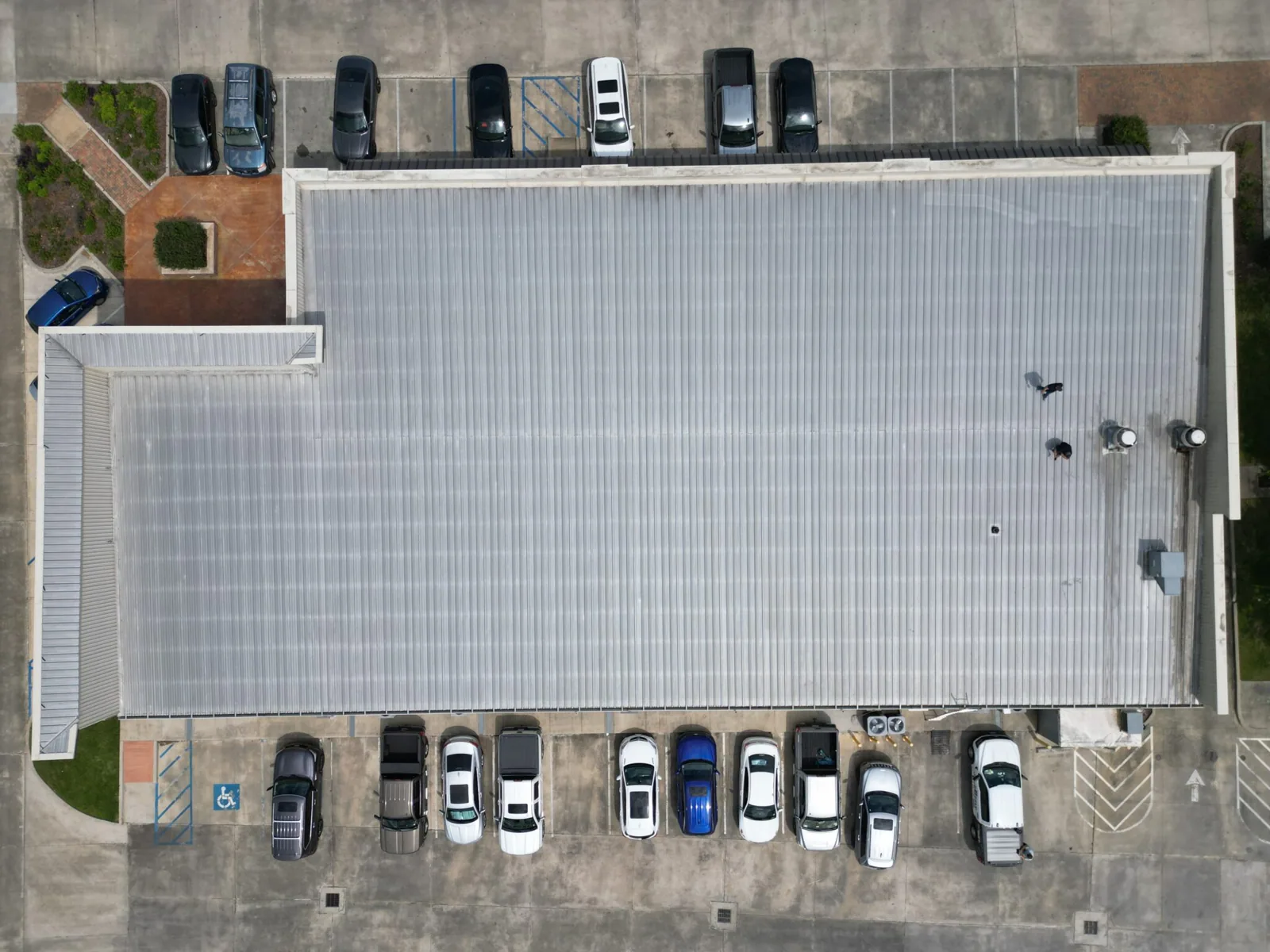
Start with a roof-area plan that distinguishes showroom, sales offices, service bays, parts areas, and canopies. Record heights, material changes, drainage outlets, equipment, access points, and the location of reported interior leaks. This map helps the owner identify whether a water mark aligns with the main roof, a canopy, or a wall transition. The name of a room does not establish its ceiling type or contents; the site contact confirms what needs protection.
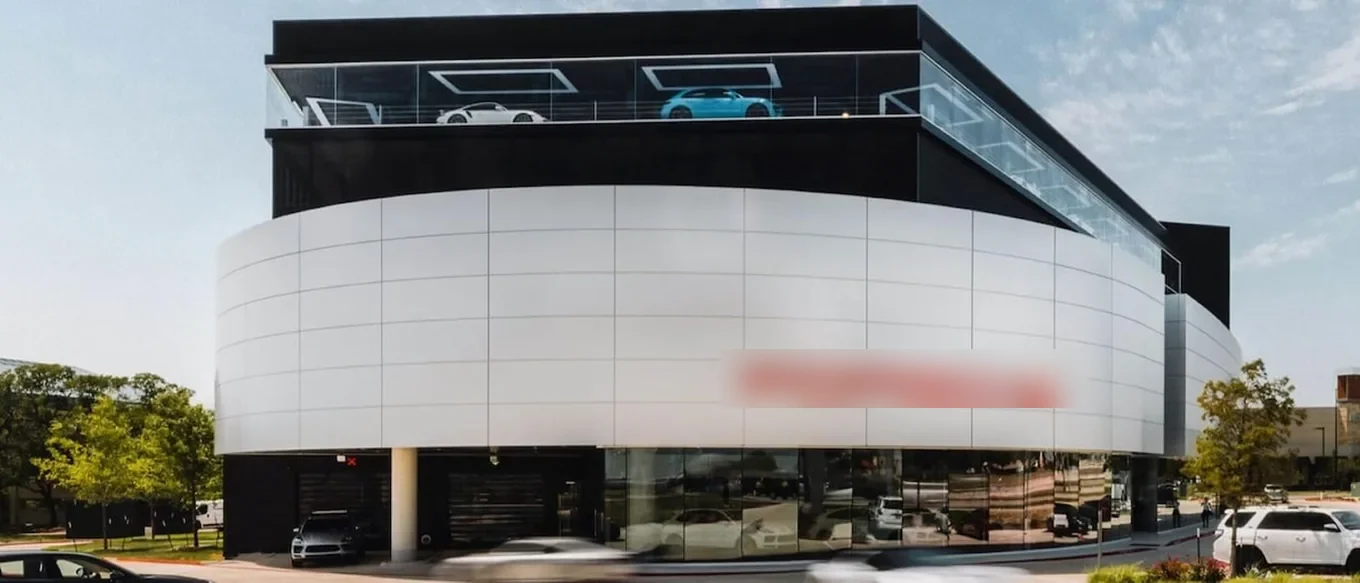
Showroom glazing creates a visible façade but does not prove how the roof-to-wall joint is flashed. We inspect the actual termination, counterflashing, sealant, and supporting substrate. Service areas often add exhaust, make-up air, electrical conduit, and other roof penetrations. Each curb and pipe needs a compatible flashing detail and enough clearance for maintenance. If equipment is scheduled for replacement, coordinate removal and restoration so the roof is not left with an open curb or temporary patch.
For a suspected concealed leak, compare interior reports with roof details before cutting. Selective test openings can help confirm membrane layers, insulation condition, and deck type. Record where each test was made and what it showed. A commercial roof inspection should state inaccessible areas and limits as clearly as observed defects.
Trace Water Across the Assembly
Water can enter at a curb or lap and travel along a deck, purlin, or insulation layer before it appears indoors. A stain near a service bay may not sit below the opening. We inspect seams, fasteners, drains, scuppers, parapets, canopy connections, and changes in elevation. When practical, the roofer and facility representative compare the exterior map with the interior report in the same visit.
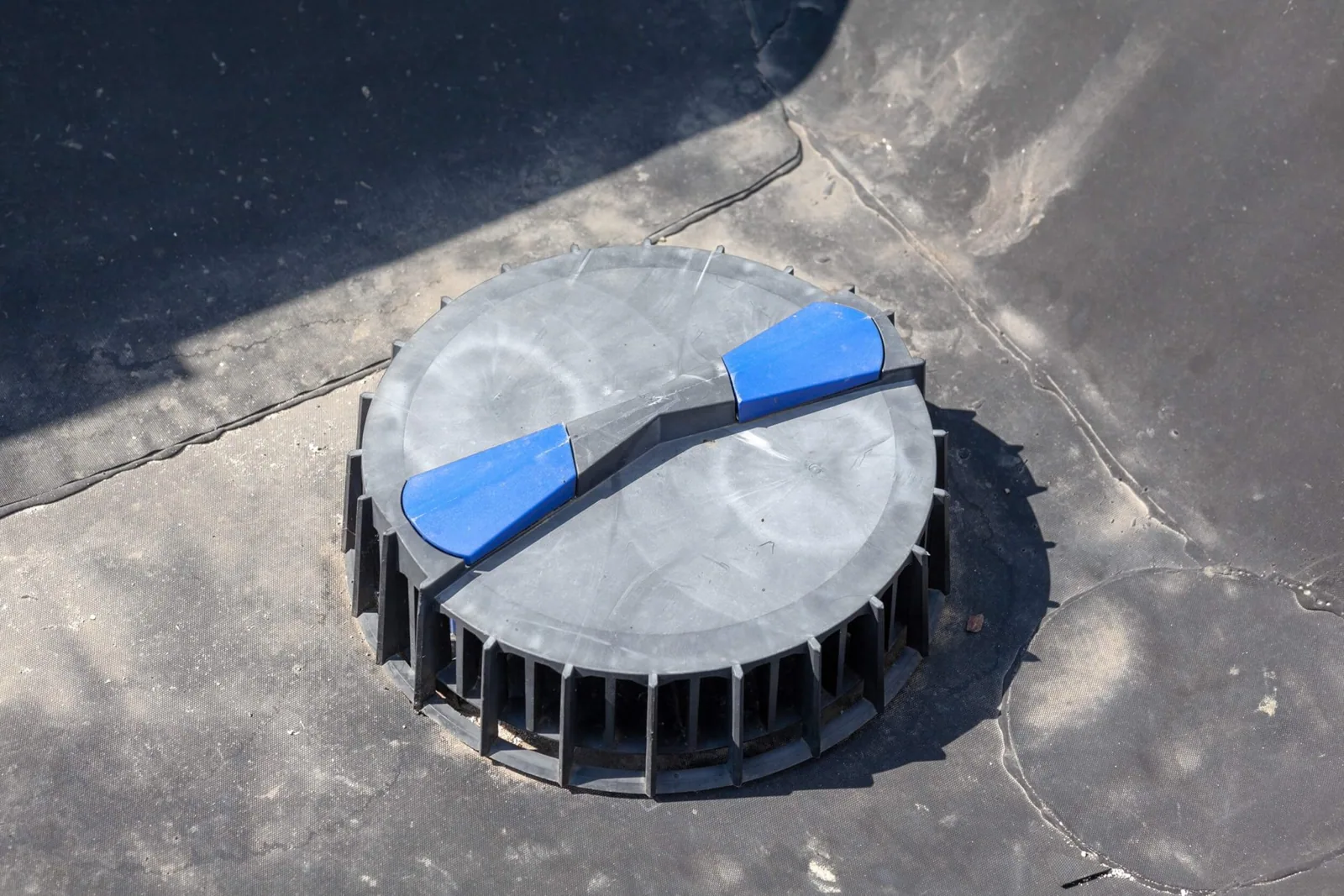
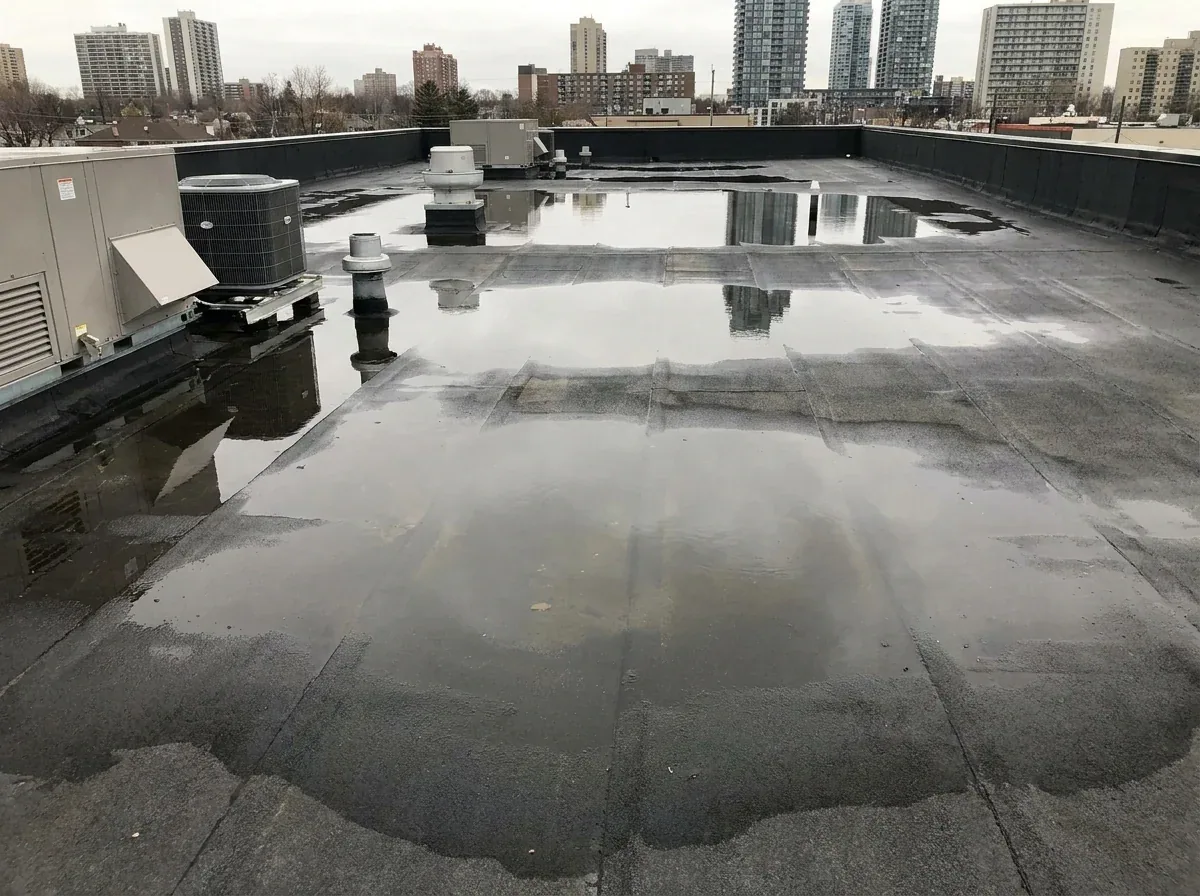
Drainage checks follow the whole route. Confirm that strainers are present, bowls are seated, overflow openings are clear, and downspouts discharge as intended. A blocked outlet can create ponding, but a persistent low area after cleaning may signal a deck or framing condition. Those are different causes and need separate recommendations. Drain and scupper work can address the outlet detail. Ponding-water repair evaluates a low area that remains after the drainage path is clear.
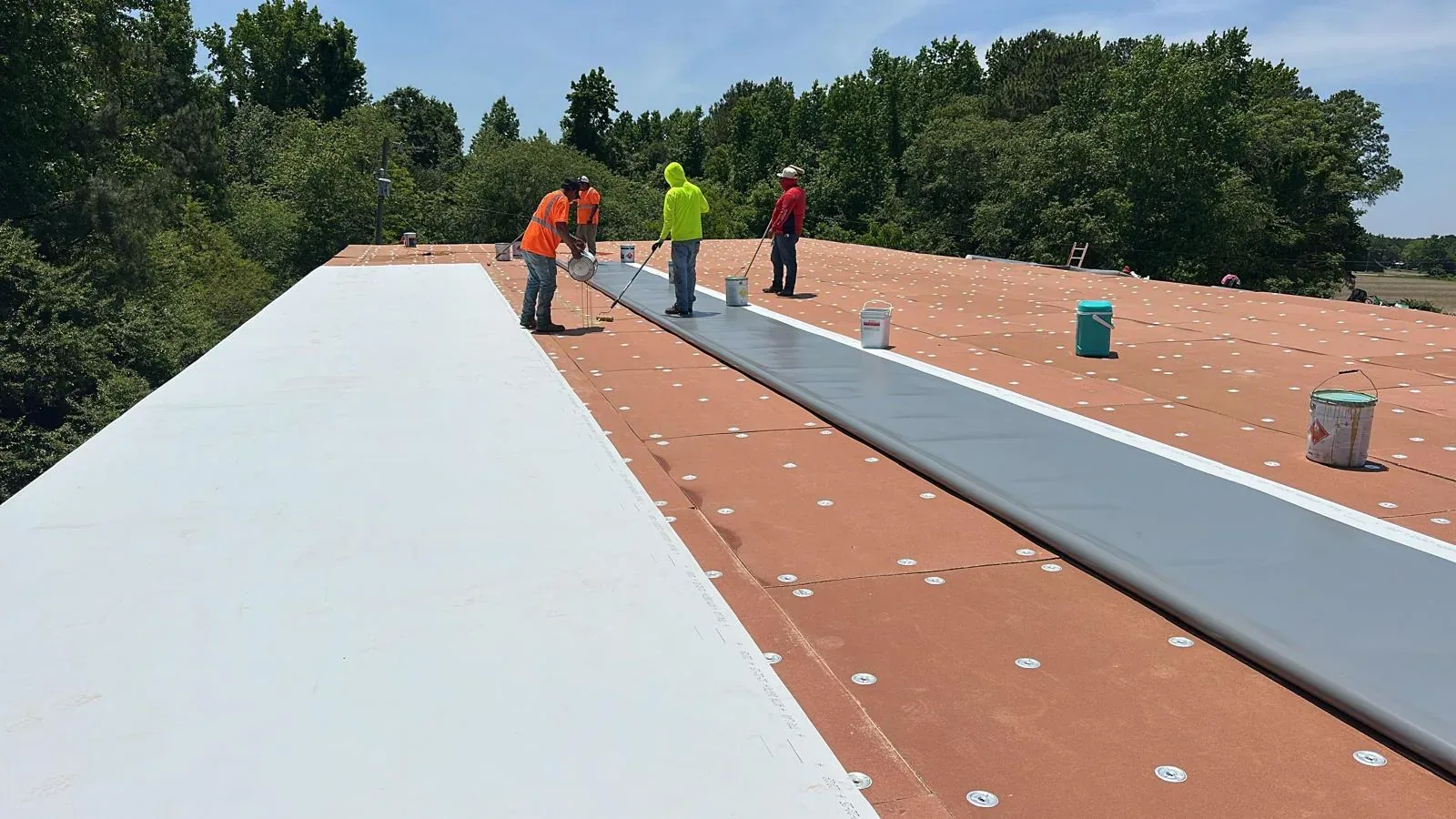
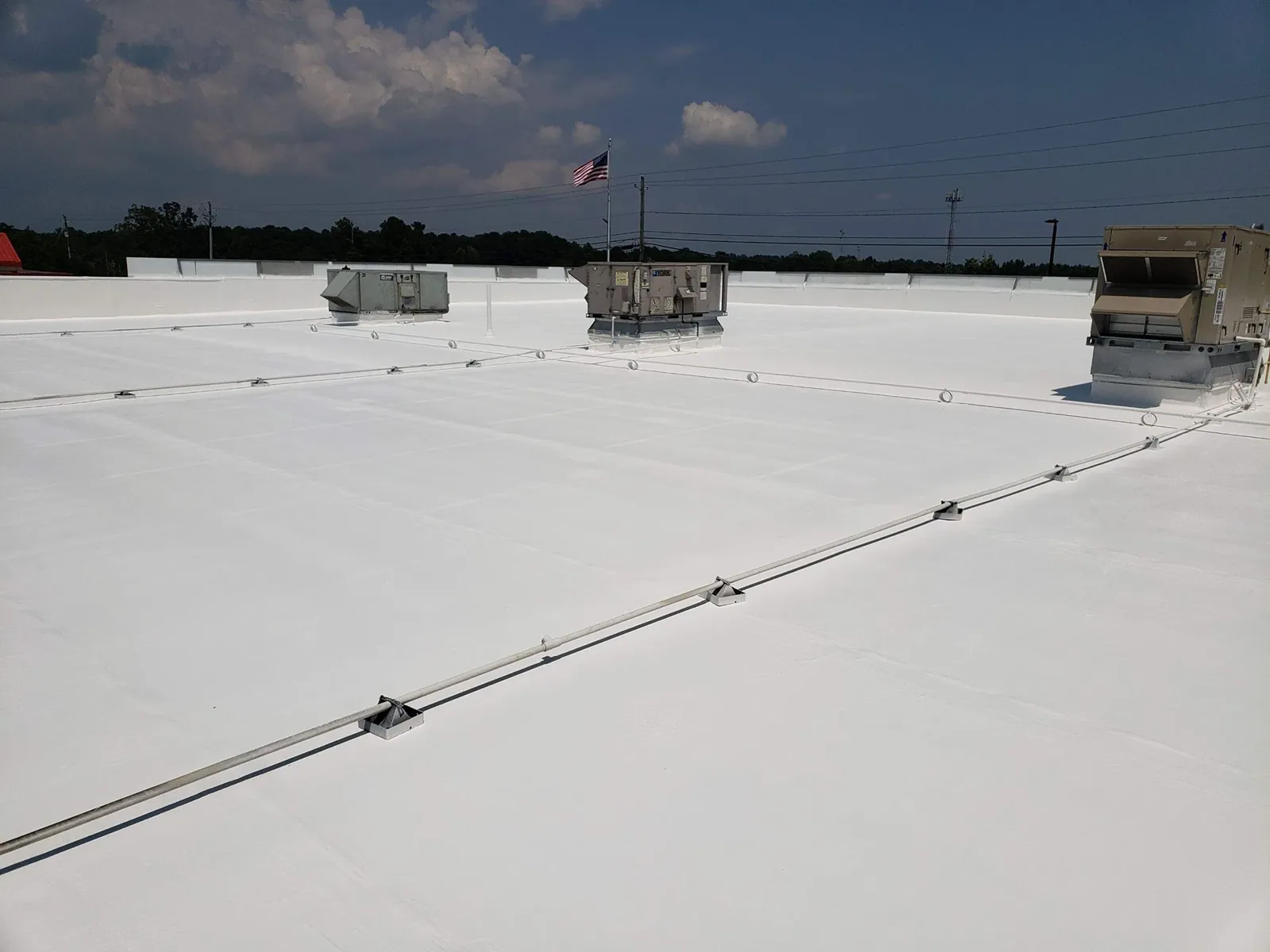
At an exposed-fastener metal section, inspect washers, seams, closures, and panel terminations. On a membrane section, look at welds or laps, base flashing, and perimeter attachment. A TPO assembly and a metal panel roof have different movement and repair details. Material identification should come before choosing patch products.
Protect Sales and Service Access
A repair plan should account for customer parking, vehicle circulation, service appointments, deliveries, and the shop's daily opening. The operator identifies entrances and routes that must remain available. The contractor defines lift placement, material staging, restricted zones, and a daily dry-in boundary. Work over one portion can often proceed while another remains in service, if separation and access are practical. The phased reroof sequence should name those work areas rather than rely on a general promise to minimize disruption.
Overhead work in a service bay requires coordination with vehicles, lifts, and technicians. The owner confirms when bays can be cleared and which equipment cannot move. No vehicle should remain beneath active removal or overhead fastening. If a bay stays operational, isolate the work area and verify that debris, tools, and water are controlled before reopening it. A repair window may be short, but closure quality matters more than leaving an unfinished opening in place.
Where the showroom has ceiling finishes or display fixtures, map protection responsibility before roof work begins. Photographs of existing conditions help establish where protection is needed. The facility contact should identify any sensitive equipment or merchandise; the roof inspection should not infer those needs from the building's use alone.
Use Market Facts Carefully
Independence's Noland Road corridor has established commercial uses, while the 23rd and Sterling area includes a mix of retail destinations. Burd and Fletcher operates a manufacturing business in the city, and the local economy also includes health, education, services, and retail. These facts show a varied commercial base, not the construction or condition of a dealership roof. A site-specific inspection remains necessary.
Kansas City airport normals range from a January daily high near 39 degrees to a late-July high near 89. Those regional air temperatures are not roof-surface measurements. During the March 2017 event, quarter-size hail was observed at Centerpoint Medical Center and larger stones two miles northeast of Independence. That event does not establish impact at a dealership. After hail or strong wind, inspect for punctures, panel dents, loose edge metal, displaced flashing, and damage around rooftop equipment. The hail damage review should record direct findings apart from age-related wear.
Make the Work Boundary Reviewable
A repair scope should identify each roof zone, suspected mechanism, material, and repair footprint. It should also state whether drainage, edge metal, penetrations, or adjacent seams are included. If a roof has both membrane and metal, list their tie-ins separately. This prevents a proposal from implying that one detail treatment covers the whole building.
For replacement, describe removal limits, substrate assumptions, insulation work, fastening or adhesion method, flashing, edge details, temporary protection, and equipment coordination. Recover is an option only when the existing layers are suitable and dry enough for the proposed assembly. If testing is incomplete, state the uncertainty and explain how concealed conditions will be documented and reviewed.
The closeout record can include roof-area labels, before-and-after photographs, completed repair details, maintenance observations, and any open conditions. A roof condition report supports planning across later inspections. Warehouse roofs and large retail buildings can have expansive low-slope areas, but dealership canopies, vehicle bays, and customer circulation create their own coordination needs. Schedule a review to establish the assembly and prepare a scope for the property.
Commercial Roofing Questions
Can roof work continue while the dealership is open?
It can when the work area, vehicle routes, customer access, and daily closure line are coordinated with the operator. Some tasks need an after-hours or closed-bay window. The schedule depends on roof access and the specific area being repaired.
Does a ceiling stain identify the roof opening?
No. Water can move along a deck, framing member, or insulation before it becomes visible. We compare the interior mark with roof transitions, seams, curbs, and drainage, then document what confirms the source.
How do you handle equipment on a service-bay roof?
We record curb and penetration conditions and coordinate any planned equipment removal with the mechanical contractor and facility contact. The scope should assign temporary protection and final flashing responsibilities before work begins. Identify exhaust, makeup-air, and other mechanical units before setting the roof scope. Confirm whether each curb can remain, needs new flashing, or must be temporarily disconnected by a qualified trade. Keep service-bay doors and customer routes clear when staging materials below. Sequence removal so each opening is protected before the next shift, then inspect the finished curb and nearby seams for damage from equipment access.
Can a hail report for Independence establish damage at a dealership?
It establishes regional event context only. The dealership roof must be inspected for direct impact, displaced details, and changes that can be distinguished from existing wear.