Repair punctures on commercial roofs in Independence, MO with substrate checks, compatible patches, moisture mapping, and a clear repair boundary.
A cut, dropped fastener, or compressed spot can break a membrane without opening a large hole. The puncture may be easy to miss around rooftop equipment, service paths, or a busy loading area. Near Eastgate Commerce Center or Noland Road, the property context may help plan access, but only a roof-level inspection can locate the damaged area. We identify the membrane, measure the affected zone, and check whether the cover board or insulation beneath it was also struck.
Read the Impact
Not every mark is a puncture. A scrape may remove surface coating but leave the membrane intact. A sharp object can cut through the sheet and compress insulation below. A dropped tool can bruise a membrane without a clean opening. We inspect the mark, check for loose fibers or displaced material, and compare it with the deck and interior. Probe the suspected edge only after identifying the system and avoiding added damage.
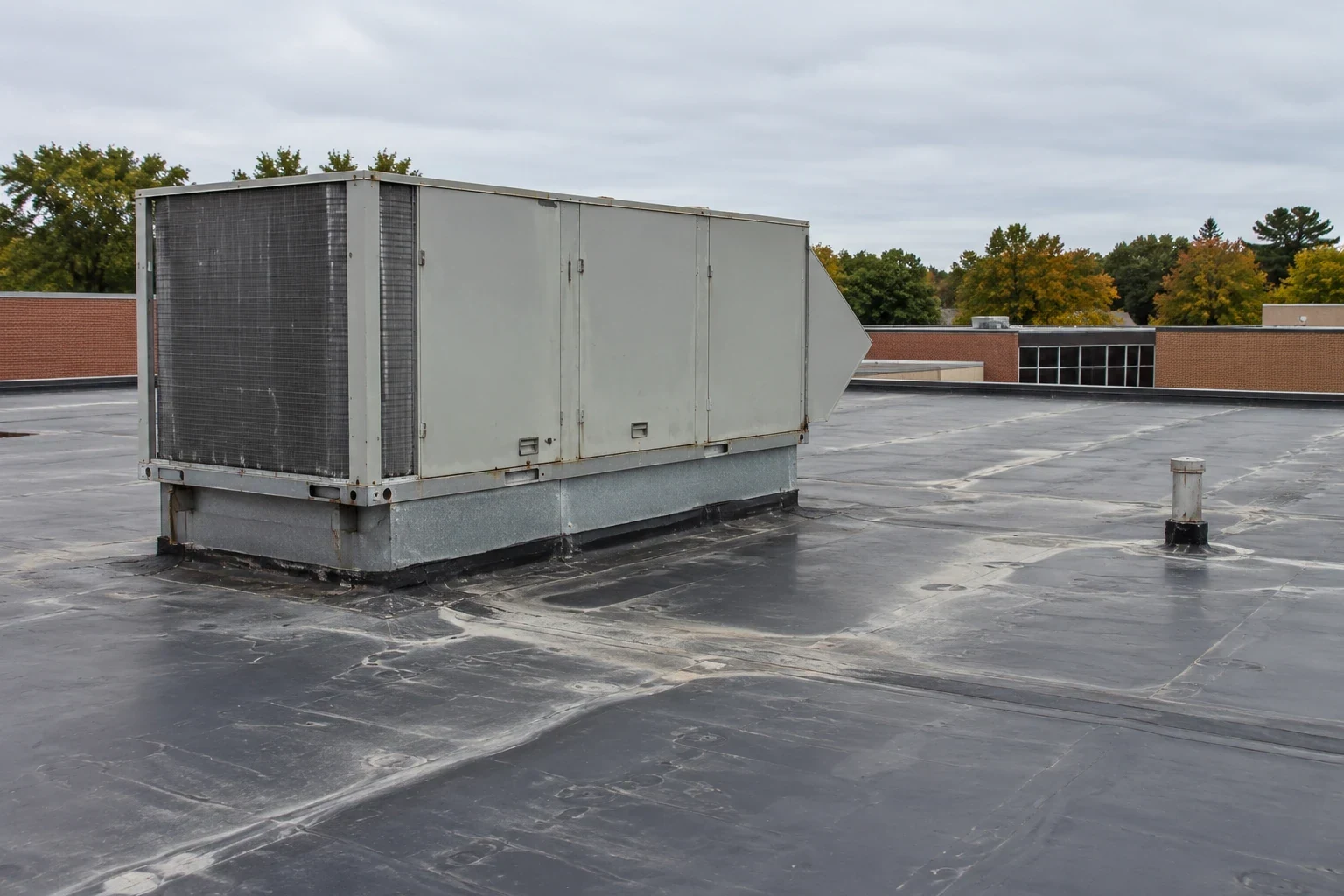
Foot traffic creates a separate pattern. Repeated paths around an HVAC unit can wear coating, abrade the membrane, or crush insulation at the same step point. A curb and equipment review can identify service routes and protection needs. We map penetrations, walk pads, and drain access so the patch does not interrupt maintenance or leave the same traffic pressure in place. The roof plan should show both the puncture and its cause when that cause is visible.
Independence's commercial building mix includes manufacturing, health, education, and retail uses. That mix gives context to the operating constraints, but it does not establish which activity damaged a particular roof. We ask what access or roof work took place, then verify the surface and substrate ourselves. A roof inspection can compare the puncture with nearby seams, flashings, and prior repairs.
Check What Lies Below
Water can enter a small opening and move laterally under the membrane. We examine insulation, cover board, and deck around the mark. Softness, displaced plates, rust, or a wet core changes the repair boundary. Infrared imaging can help identify test areas, but direct verification may still be necessary. We mark what is confirmed and what remains concealed so a small surface repair does not imply that every affected layer has been checked.
Climate records for the Kansas City observation station show January normal temperatures below freezing and a normal July high of 89 degrees. Seasonal movement and heat exposure can affect an existing patch's bond and the membrane around it. Those records describe the metro station. The roof inspection determines the material condition at this address. For a puncture in a field membrane, we also check the closest seam, drain, curb, and change of plane because those details can hold water near the opening.
If water is entering, interior protection and safe access come first. Emergency calls are answered around the clock, including weekends and holidays. When conditions prevent permanent work, we document temporary protection and schedule a return inspection. A moisture survey can help define the area for selective testing, while leak tracing follows water to its entry point.
Patch a Sound Assembly
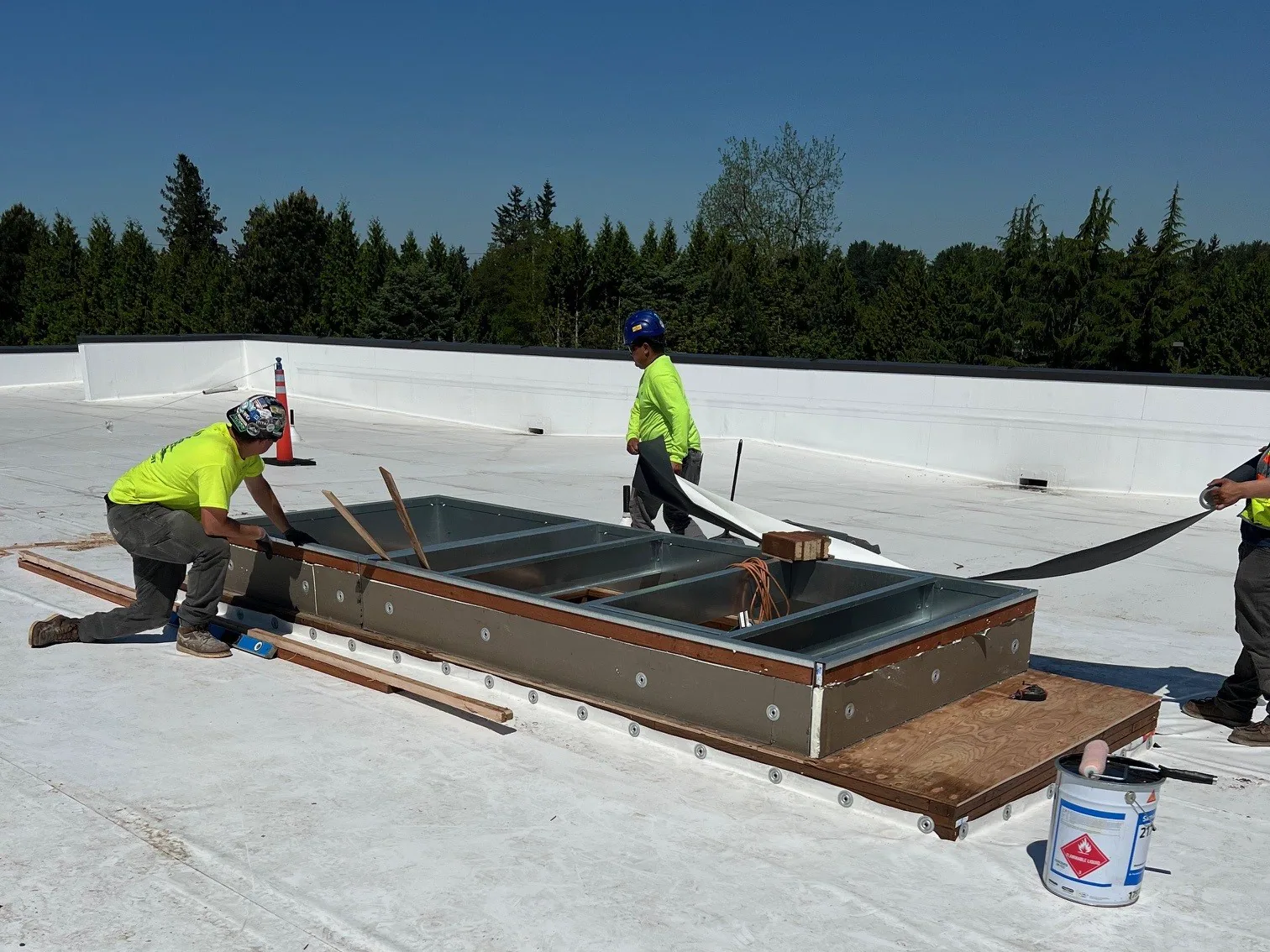
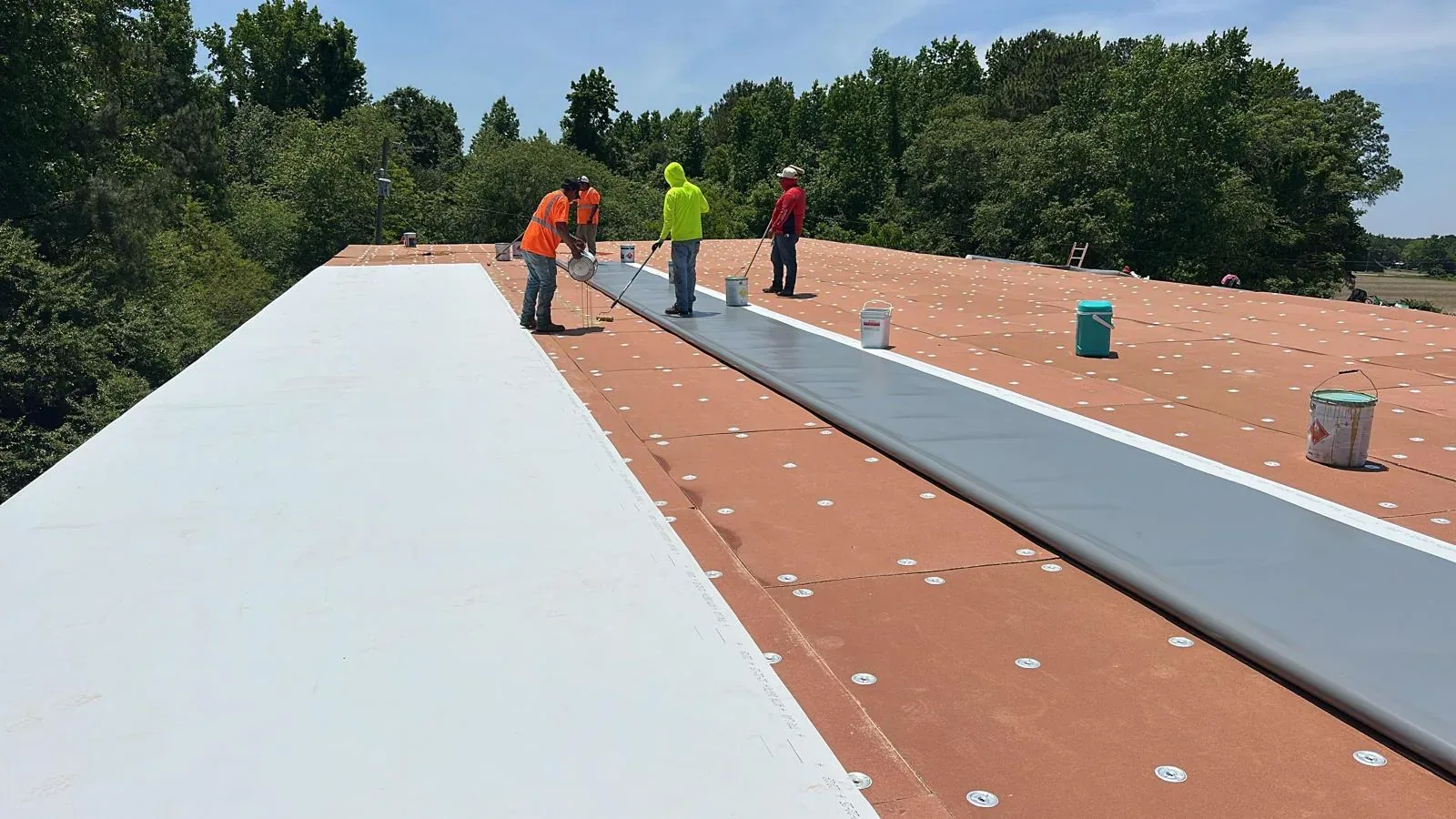
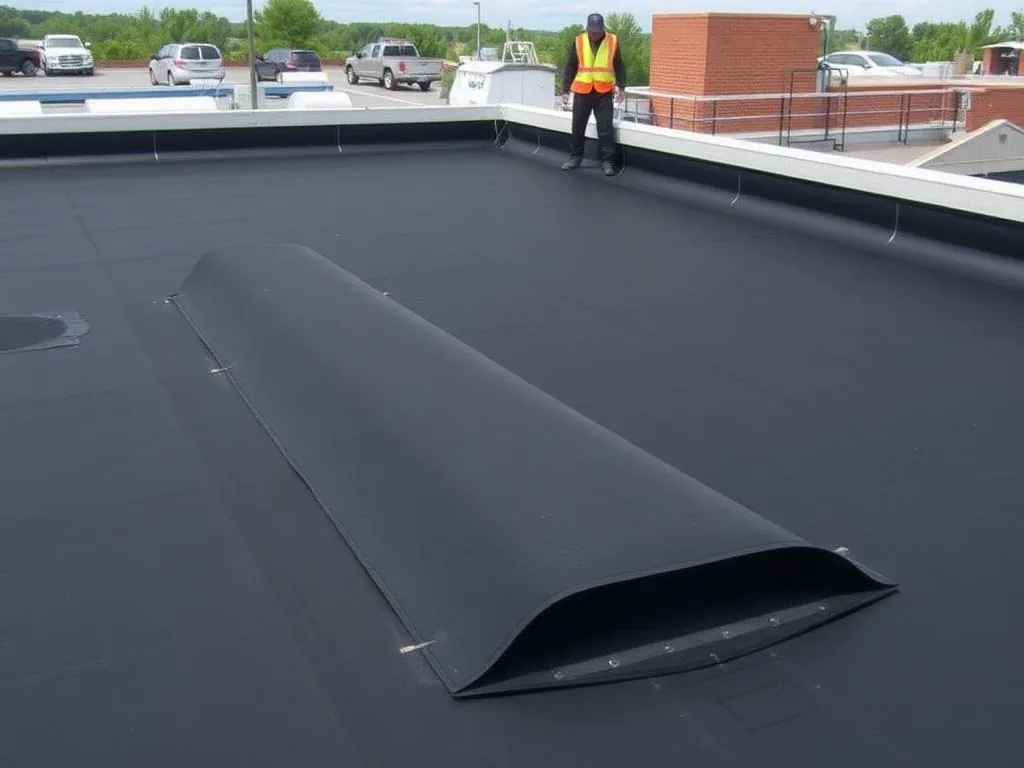
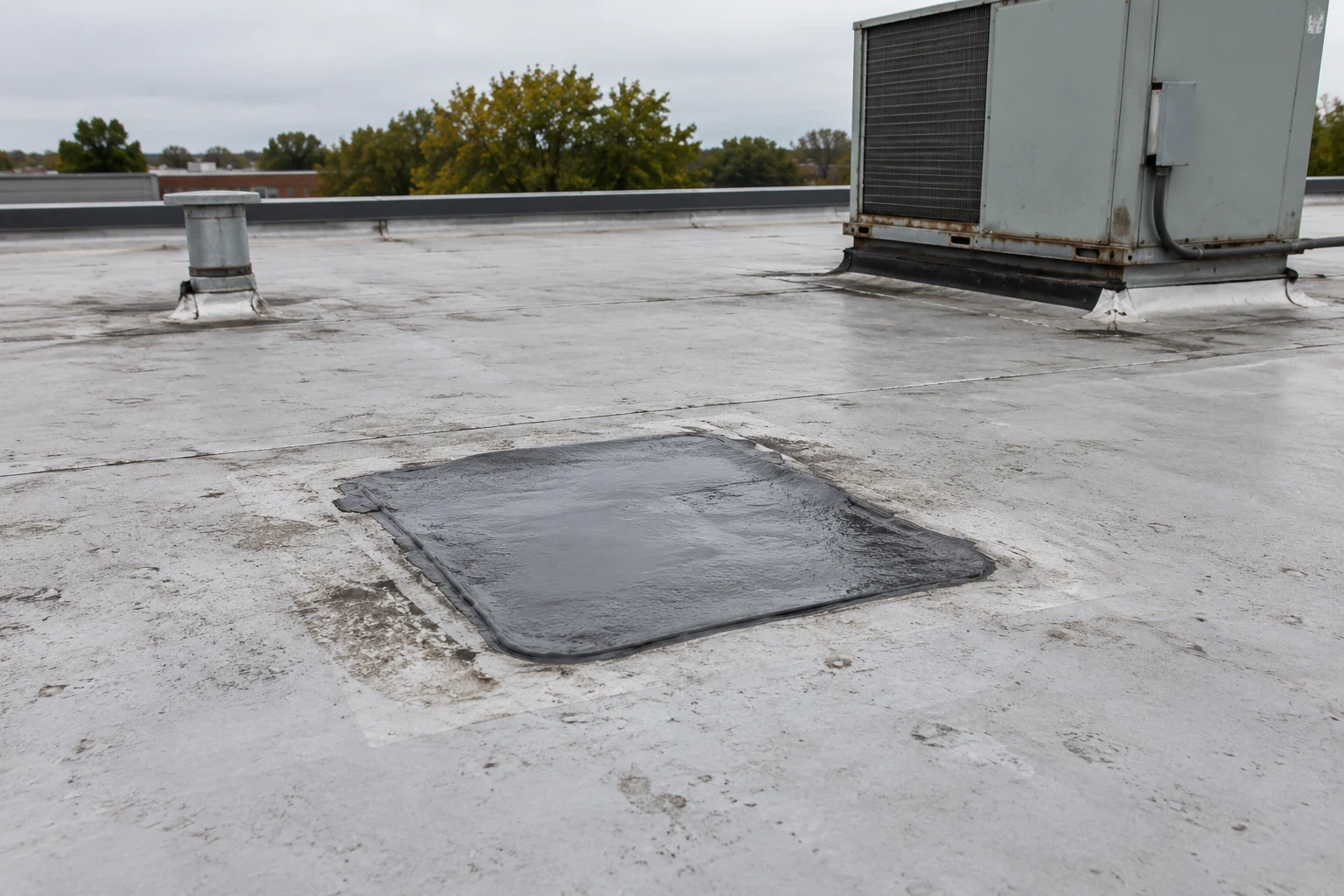
Material compatibility controls the patch. For TPO or PVC, we clean the surface, prepare the membrane, weld a patch that extends onto sound material, and probe the completed seam after it cools. EPDM requires the proper cleaner, primer, tape, and cover patch. Modified bitumen uses compatible bituminous materials and surfacing. Metal roofs need panel or fastener work rather than a membrane patch. Each method depends on dry conditions, preparation, and a stable substrate.
A puncture over wet or crushed insulation needs more than a cover patch. We remove the affected layers to a defined limit, repair the deck if required, install new insulation and cover board, then tie the membrane into dry, stable material. An existing patch that covers multiple old cuts may need removal so the roof can be inspected. TPO repairs and EPDM repairs are not interchangeable, even if the opening looks similar from above.
Cost and schedule depend on the number and size of punctures, roof height, access, membrane type, and hidden moisture. Work near a production line, clinic, or retail tenant may need a defined access window and interior protection plan. When punctures are part of widespread deterioration, compare local repair with recover feasibility or replacement. A recover requires a suitable existing assembly and dry material below the new system.
Change the Exposure
Repair the activity that put the roof at risk where possible. Add walk pads between service access and equipment. Protect a frequently used maintenance route. Secure loose materials and review rooftop work practices. If a recurring puncture appears at one location, ask whether equipment service, antenna work, or debris storage keeps loading the same roof panel. Preventive maintenance can record repeated wear before it becomes an interior leak.
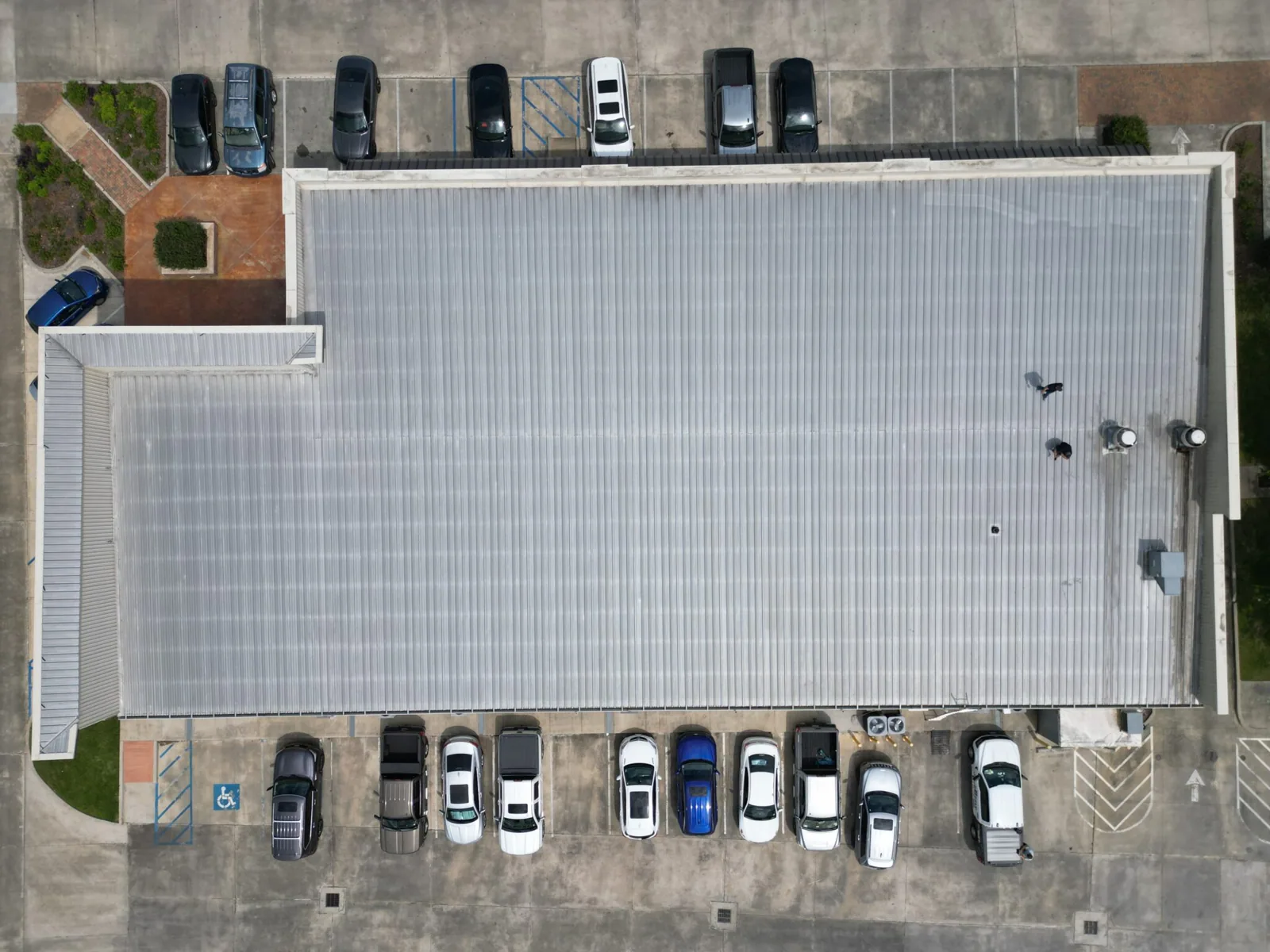
Inspections near Independence Square and along US 24 can involve different access and staging conditions, so confirm the route with the property contact before mobilization. The closeout map should locate each patch and note adjacent seams or penetrations inspected. A hail bruise and a sharp-object puncture have different evidence and need separate descriptions. Hail inspection records impact marks independently of cuts.
Record the Repair
We photograph the opening before removal, show the substrate if exposed, and record the patch limits and material. A final check confirms bond, weld, water-shedding, and drainage at the repaired zone. If moisture extends beyond the removal area, note the added test or follow-up rather than treating the visible patch as closure. Clear records help facilities staff avoid foot traffic across a repair until the materials are ready for service.
Schedule a commercial roof review in Independence to identify the puncture, inspect underlying layers, and choose a system-compatible repair. Where storm debris may have caused a cut, we inspect surrounding edges and document displacement separately. Wind damage findings help distinguish a puncture from lifted attachment or flashing. We will document the cause when it can be established and identify protection needed to prevent another cut at the same location.
Commercial Roofing Questions
Can you patch a hole without removing insulation?
Yes, when the substrate is dry, firm, and not compressed. We test around the opening and expand the work only if moisture or damage reaches the layers below.
How do you tell a puncture from a surface scuff?
We identify the membrane and inspect the mark for a breach, exposed reinforcement, displaced material, or compression. A compatible probe or test may be used without enlarging damage. A scuff removes or abrades the top surface without necessarily opening the sheet. A puncture crosses the membrane and may expose reinforcement or the layer below. Clean the area, inspect from several angles, and test suspect edges without enlarging the defect. Document the distinction before selecting a patch, since an intact wear mark and an opening require different work.
Will the same repair material work on TPO and EPDM?
No. The cleaning, bonding, and patch methods differ. We match the repair to the roof system and prepare the surface before installing a patch.
What can prevent repeat damage near HVAC equipment?
A defined service path, walk pads, secured equipment work, and maintenance notes can reduce traffic wear. We identify the exposure with the repair map. Keep a defined access path to each unit and avoid dragging tools, hoses, or replacement parts across the membrane. Where service work must cross a seam, use suitable walk pads without blocking drainage. After equipment service, inspect the field around curbs, piping supports, and condensate lines for cuts or abrasion. A small service-related defect is easier to repair before water has moved beneath the membrane.